Home / Conditions / Neck pain
Neck pain specialist in Singapore
Ongoing neck pain, stiffness, or pain spreading to the shoulder blade, arm or head.
About neck pain
Long-standing neck pain commonly comes from the facet joints of the cervical spine, the discs, or the muscles of the neck and upper back. When a nerve root is irritated, pain, tingling or numbness can travel down the arm.
Symptoms
- Aching and stiffness in the neck, worse with looking up or turning
- Pain spreading to the shoulder blade or top of the shoulder
- Headache starting at the base of the skull
- Arm pain, tingling or numbness if a nerve root is irritated
- Reduced range of movement
Common causes
- Cervical facet joint pain
- Cervical disc degeneration or disc prolapse
- Whiplash and other injuries
- Cervical radiculopathy (a pinched nerve)
- Muscle tension related to posture and work
How it is diagnosed
Dr Hope will examine your neck, shoulders and nerves, and review any X-ray or MRI. Pain that is worse when tilting the head back and turning to one side often points to the facet joints. Pain shooting down the arm suggests a nerve root. Diagnostic blocks under X-ray guidance can confirm the source before longer-lasting treatment.
How Dr Hope can help
Your first consultation includes a full history and examination and a review of any scans. Treatment options may include:
- Medication review
- Image-guided cervical facet or medial branch blocks
- Radiofrequency ablation for facet joint pain
- Cervical epidural or nerve root injections
- Trigger point injections
- Rehabilitation planning with your physiotherapist
Not every option suits every patient. Dr Hope will explain the expected benefits, risks and costs of each before you decide.
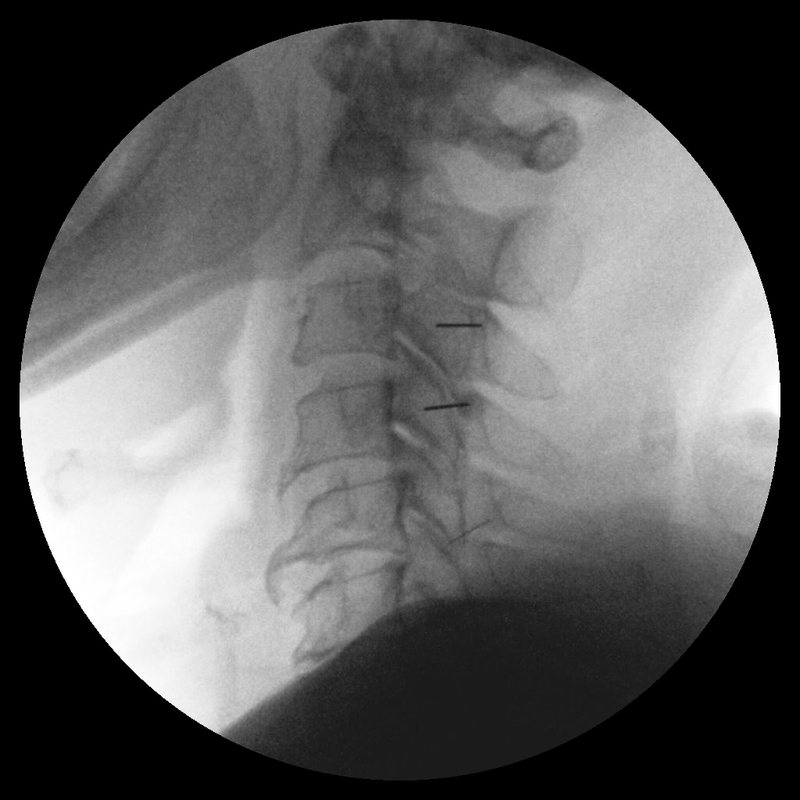
What to expect on the day of a procedure
Neck procedures are done with live X-ray guidance while you lie on your side or front. The skin is numbed and fine needles are placed precisely. A cervical medial branch block takes about 20 to 30 minutes, and radiofrequency ablation about 45 to 60 minutes. You go home the same day.
Recovery and results
Most people return to normal activities within a day or two. Avoid driving on the day of the procedure if you had sedation. A neck exercise programme helps maintain the benefit.
What you can do
- Set your screen at eye level
- Take regular breaks from phone and laptop use
- Do gentle neck and shoulder stretches daily
- Use a supportive pillow
Questions
Can neck problems cause headaches?
Yes. Pain from the upper neck joints can be felt in the back of the head. This is called cervicogenic headache and can sometimes be treated with targeted nerve blocks.
Is it safe to inject near the neck?
Neck procedures are done under live X-ray guidance by a trained specialist, which allows precise needle placement. Dr Hope will explain the specific risks before you decide.